Tuesday, July 12, 2022

GIRLS’ WEEKEND!


My sisters, mom, and I like to get together each year for a girls’ weekend or week. Due to the pandemic, we haven’t gotten together for the past few years. In June, we resumed getting together for my mom’s 84th birthday. We didn’t do a lot because of my mom’s bad back but had a great time.

Front row L-R: Kath, Mom, me. Back row: Deb

We stayed at my sister’s house. She cooked salmon for Mom’s birthday. It was delicious! We had my favorite birthday cake of choice—angel food cake with strawberries and whipped cream. (Mom’s favorite too.) However, I opted for raspberries. It was just as awesome! But the raspberries prompted a whole discussion with my nephew and niece on what are and aren’t true berries. Apparently, both strawberries and raspberries are NOT true berries. But blueberries, zucchinis, bananas, avocados, as well as most of the things we think of as “vegetables” are actually berries. I was so confused by the end. To me, strawberries and raspberries will always be berries.

Another thing we did was my sisters and I took a walk with my sister’s dog. We went through this wooded area along the river. It was gorgeous. All along the path were painted rocks. We think it was probably a class project for students at the end of the school year. I didn’t think to take any pictures and when my sister went back a few days later, they were all gone. We assume they put them day earlier in the day and retrieved them by the end of the day. They were cute. Some said “You Rock”, “Be Kind”, some had other words, others were pretty colors, while still others had pictures on them. They were fun to see.

We played ponytail canasta (a card game). But the most hilarious thing was giving my mom a perm. I roped my sisters into helping me wrap our mom’s hair in the rods so it would go faster, because Mom has a hard time sitting in a chair for long stretches. We laughed our way through it. Hen the next day, I cut Mom’s hair.

Being a crafty person, I brought a craft for each of us. I chose Diamond Art. They were on sale, so I picked up one each of us. I got a rose for my mom, a butterfly for my oldest sister, a white horse for my next oldest sister, and a brownish kitten for me.

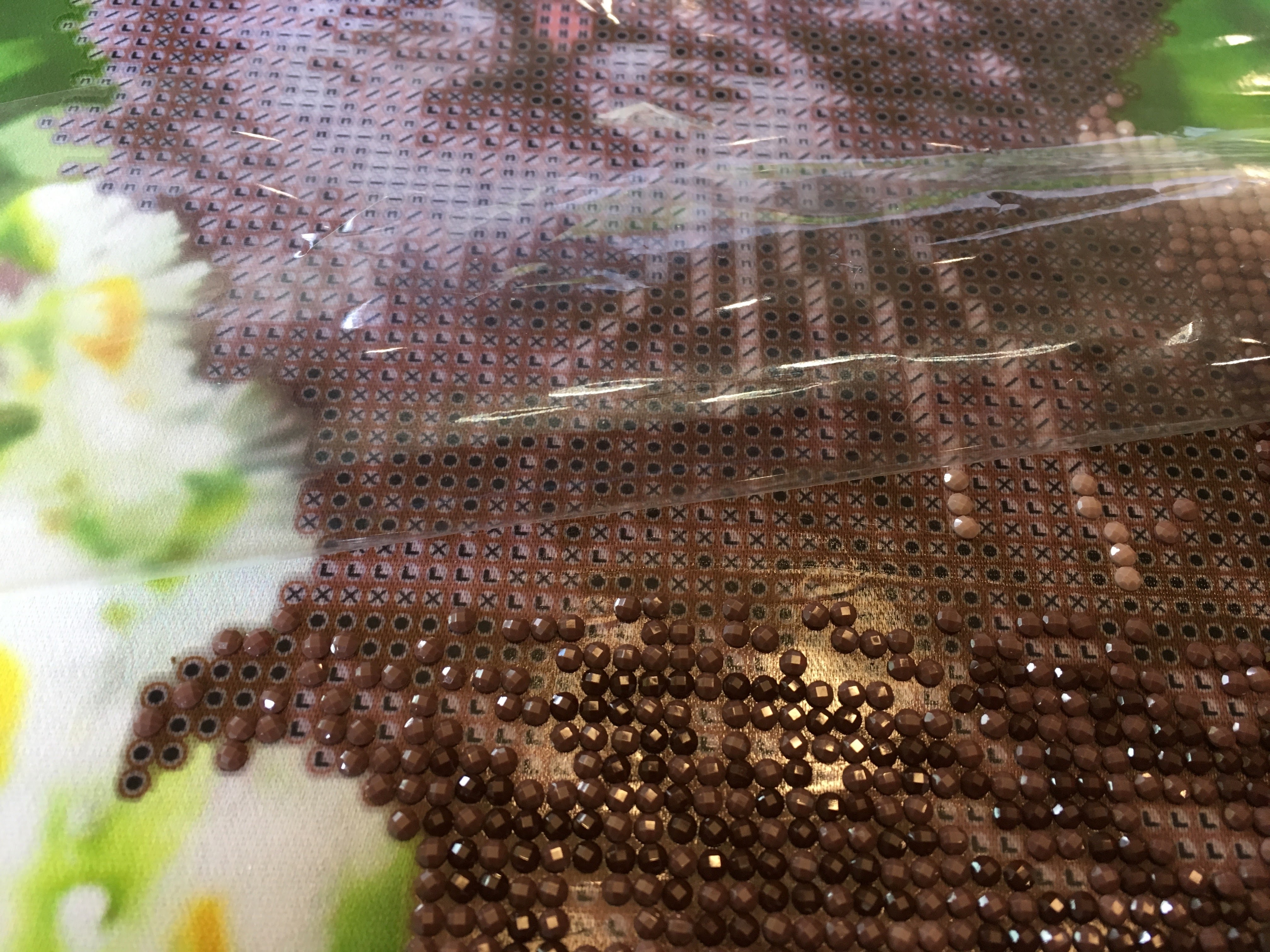
I wasn’t sure if I would like this particular craft, assuming it would be too tedious. I really enjoyed it and found it addictive. When I finish this one, I want to do another. I’m going to look for a fairy, if they make one. We all loved working on them. I didn't finish working on mine while I was on vacation and haven't had the time or space to finish it since returning home. But I have been quite sick for a couple of weeks.

We went to a small farmers’ market where we got some awesome garlic bread. I bought myself this pretty purple ring.

It was a great get together. I’m so pleased we had been able to resume our tradition this year. We are already thinking about next year.


THE QUILTING CIRCLE

Historical Romance Series

By Mary Davis

THE WIDOW’S PLIGHT (Book1) – Will a secret clouding a single mother’s past cost Lily the man she loves?

THE DAUGHTER’S PREDICAMENT (Book2) *2020 Selah Awards Finalist & WRMA Finalist* – As Isabelle’s romance prospects are turning in her favor, a family scandal derails her dreams.

THE DAMSEL’S INTENT (Book3) *2021 Selah Awards Winner& WRMA Finalist*– Nicole heads down the mountain to fetch herself a husband. Can she learn to be enough of a lady to snag the handsome rancher?

THE DÉBUTANTE’S SECRET (Book4) – Complications arise when a fancy French lady, Geneviève, steps off the train and into Deputy Montana’s arms.

THE LADY’S MISSION (Book5) – Will Cordelia abandon her calling for love? (Releases October 5, 2022)


MARY DAVIS, bestselling, award-winning novelist, has over thirty titles in both historical and contemporary themes. Her latest release is THE DÉBUTANTE'S SECRET (Quilting Circle 4) THE DAMSEL’S INTENT (Quilting Circle 3) is a Selah Award Winner. Some of her other recent titles include; The Widow’s Plight, The Daughter's Predicament, “Zola’s Cross-Country Adventure” in The MISSAdventure Brides Collection , Prodigal Daughters Amish series, and "Bygones" in Thimbles and Threads. She is a member of ACFW and active in critique groups.
Mary lives in the Pacific Northwest with her husband of thirty-seven years and one cat. She has three adult children and three incredibly adorable grandchildren. Find her online at:


Tuesday, June 21, 2022

Tuesday Tidbits: THE KEYS TO THE CASTLE

“I’ve got the key to my castle in the air, but whether I can unlock the door remains to be seen.” —Jo in Little Women By Louisa May Alcott

What is the greatest luxury of a home?
Fine China?
Silk sheets?
A fabulous shoe collection?
 

The thing of most value of any house is the lock on the front door and the key to it. A lock and key provide security for all we hold dear within—including people and pets.

Early “locks” consisted of a board across the door set into brackets. Effective if one is on the inside. What about when a person left their home? How could one keep their belongings safe?
 

Locks with keys.

Isaiah 22:22 “And the key of the house of David will lay on his shoulder.” This sounds figurative but was likely literal. To say the first keys were large and cumbersome is an understatement. The colossal marble and bronze doors of ancient Egyptian and Greek buildings could have keys as large as three feet. These heavy mammoths were similar in size and shape to a sickle. They were so weighty they needed to be carried over the shoulder. If the size wasn’t enough, they were decorated with gold and silver and embellished with ivory handles. The man of the house was the only one entitled to the “power of the keys.” I say if he wants to carry that behemoth, let him.

I guess I never imagined keys as anything bigger than palm-ish sized or at most the length of my forearm. I wonder if they had notches similar to modern keys so that not just any sickle-sized key could open every door.


The Romans improved upon the key in both scale and design by crafting them from metal. The door locks were simple lever designs. Inside the house, valuables were secured in lockboxes. The keys to those boxes were worn on a ring as a status symbol. If a person had a lot of keys, that meant they had a lot of valuables that needed to be locked up.

Men held the power by controlling the keys. By law, a man could take his wife’s life—without due process—for adultery, claiming another man’s child as her husband’s, habitual drunkenness, or having a duplicate key. Apparently, it was grave business to protect one’s wealth.


During medieval times, people tried to thwart potential thieves by designing false keyholes or concealing real ones with elaborate ornamentation and details, making them nearly impossible to find unless you knew where to look.

If the keyhole trick wasn’t to your liking, you could go with option B: require multiple keys to open a door or chest. In 1496, to guard the virtue of Queen Isabelle of France’s ladies-in-waiting, five keys were required to open their chamber from the outside. Around this same time, a common practice was for chests to have two dozen locks evenly space around the lid.

During the Middle Ages and Renaissance, the rules about who could be the bearer of the keys was loosened up to include the wife. Married women often wore extravagant key rings on their clothes as much for necessity and accessibility as for social status and showing her right to spend family funds.
 

But no key has ever been as grand as the one King Louis XVI presented to his young bride of nineteen Marie-Antoinette. The key to the Palace of Versailles had 531 diamonds inlaid in it.

Creative locksmiths made “detector locks” which could keep count of the number of times they were unlocked. Poking your nose where it didn’t belong could also be dangerous. A lock in a French catalog advertised it could grab the wrist of anyone who used the wrong combination and fire a pistol. Sounds like something out of a treasure hunt movie.

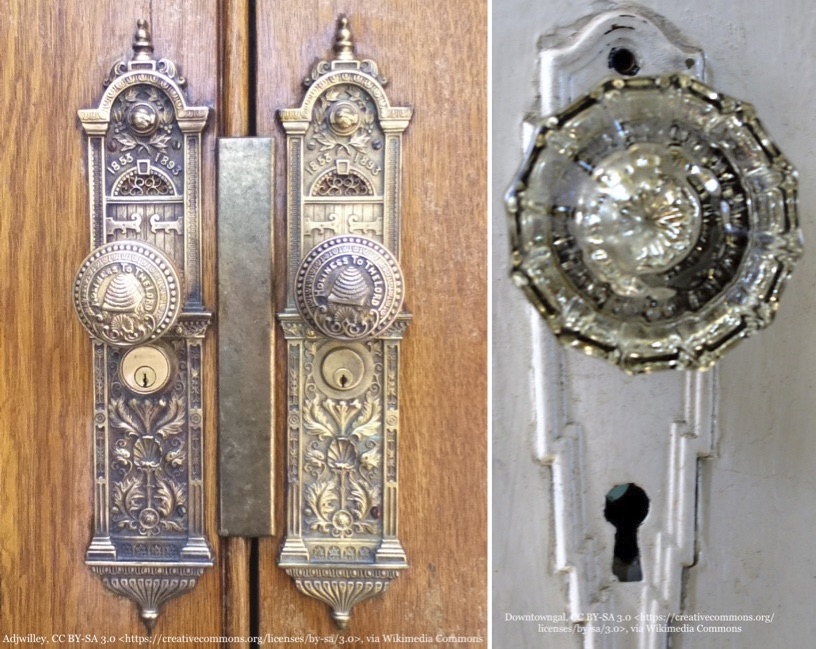
In the 1970s, I lived in a house that used a skeleton key similar to the ones in the above picture. My grandparents' house used them for the longest time. Did you ever live in a house that had a skeleton key?

THE QUILTING CIRCLE

Historical Romance Series

By Mary Davis

THE WIDOW’S PLIGHT (Book1) – Will a secret clouding a single mother’s past cost Lily the man she loves?

THE DAUGHTER’S PREDICAMENT (Book2) *2020 Selah Awards Finalist & WRMA Finalist* – As Isabelle’s romance prospects are turning in her favor, a family scandal derails her dreams.

THE DAMSEL’S INTENT (Book3) *2021 Selah Awards Winner& WRMA Finalist*– Nicole heads down the mountain to fetch herself a husband. Can she learn to be enough of a lady to snag the handsome rancher?

THE DÉBUTANTE’S SECRET (Book4) – Complications arise when a fancy French lady, Geneviève, steps off the train and into Deputy Montana’s arms.

THE LADY'S MISSION (Book5) RELEASES October 2022 – Is Lamar the one to finally break the determination of Cordelia’s parents to marry her off? Or will this charming bachelor fly away with her heart?


MARY DAVIS, bestselling, award-winning novelist, has over thirty titles in both historical and contemporary themes. Her latest release is THE DÉBUTANTE'S SECRET (Quilting Circle 4) THE DAMSEL’S INTENT (Quilting Circle 3) is a Selah Award Winner. Some of her other recent titles include; The Widow’s Plight, The Daughter's Predicament, “Zola’s Cross-Country Adventure” in The MISSAdventure Brides Collection , Prodigal Daughters Amish series, and "Bygones" in Thimbles and Threads. She is a member of ACFW and active in critique groups.
Mary lives in the Pacific Northwest with her husband of thirty-seven years and one cat. She has three adult children and three incredibly adorable grandchildren. Find her online at:

Referenced:
Elements of the Home by Amy Azzarito
https://en.wikipedia.org/wiki/Lock_and_key
https://www.historicallocks.com/en/site/h/articles/historyaboutlocks/history-of-keys/
http://www.historyofkeys.com/
http://www.historyofkeys.com/keys-history/history-of-keys/
https://blog.keycafe.com/the-history-of-keys-and-locks/
https://science.jrank.org/pages/3989/Lock-Key-History.html

Tuesday, May 17, 2022

Tuesday Tidbits: KNOCK, KNOCK


Do you think much about doors? What is a door? A door is many things…
...an entry
…an exit
…welcoming
…protection
…a transition point
…a portal
…a connection between two worlds

We couldn’t imagine our personal dwelling place without a door. From whence did they come?

The first known door dates back to 4,000-year-old Egyptian tomb paintings.

Early doors were made out of whatever was available locally, generally wood or stone. Later, some doors were made of or overlaid with bronze and other materials.

Ancient stone doors had pivot posts at the top and bottom which fit into sockets for it to swing open and closed. My back hurts just thinking about opening that heavy door.

In the 1st century AD, Greek scholar Heron of Alexandria created the first recorded automatic door. The Chinese developed the first foot-sensor-activated door around 604-618 AD for Emperor Yang of Sui for his royal library. And here I thought automatic doors were a relatively new invention.

During medieval times of the 12th and 13th centuries, the symbol on a door was significant. It could denote prestige, status, and wealth. Doors and the architecture surrounding them became more and more elaborate.


Once at a person’s door, how does one announce oneself? Door knockers were a favorite and, like doors, could tell a visitor a little something about who dwelt beyond the barrier. For instance, a lion door knocker indicated that a Christian resided within.

Customs changed over the centuries and depending on your station. As they say, when in Rome . . . In Ancient Rome, knocking was done with the foot. In the middle ages, one would knock with a single hand, or some preferred a more subtle approach and simply coughed to announce their arrival. In 16th century Cologne, important people brought along a servant to knock for them. And in 18th century Versailles, knocking was out and scratching with the fingernails was in. That’s just creepy.

An indispensable part of the door is the knob. History is a little unclear about when doorknobs came on the scene, but they weren’t as we have today. Knobs that have a fitted socket and a mechanism which allows them to turn didn’t pop up until the late 1880s. This surprised me. I thought turning knobs would have been around much longer.

For some, a simple door would never do. The more unique, ornate, and bigger, the better. For three years, William K. and Alva Vanderbilt were working on a secret project that had many curious. The eight-foot-high fence protecting their secret came down on August 19, 1892 to welcome society’s elite to their Marble House in Newport, Rhode Island. The most impressive marvel of engineering was the pair of sixteen-foot-high and twenty-five-feet-wide steel and glass doors. Each weighed more than a ton! The knobs on such doors must have been equally impressive. They weren’t, and they were. They weren’t impressive because there were no knobs. At all. The impressive part was that footmen in maroon uniforms stood behind each door to open and close them so the wealthy wouldn’t have to exert themselves.

Though I’m all for people opening and holding doors for others, I prefer doors I can operate myself if I so choose.

Without doors, architecture would be little more than a box with no way in or out.

Referenced:
Elements of the Home by Amy Azzarito
https://medium.com/@sburiek/the-history-of-doors-a-travel-through-time-a058b5fbca66
https://en.wikipedia.org/wiki/Door

***NEW RELEASE! THE WAIT IS OVER!***

MRS. WITHERSPOON GOES TO WAR (Heroines of WWII series)

A WASP (Women Airforce Service Pilots) flies a secret mission to rescue three soldiers held captive in Cuba.

Margaret “Peggy” Witherspoon is a thirty-four-year-old widow, mother of two daughters, an excellent pilot, and very patriotic. She joins the WASP (Women Airforce Service Pilots). As she performs various tasks like ferry aircraft, transporting cargo, and being an airplane mechanic, she meets and develops feelings for her supervisor Army Air Corp Major Howie Berg. When Peggy learns of U.S. soldiers being held captive in Cuba, she, Major Berg, and two fellow WASPs devise an unsanctioned mission to rescue them. With Cuba being an ally in the war, they must be careful not to ignite an international incident.

  Order HERE!
MARY DAVIS, bestselling, award-winning novelist, has over thirty titles in both historical and contemporary themes. Her latest release is THE DÉBUTANTE'S SECRET (Quilting Circle Book 4) THE DAMSEL’S INTENT (The Quilting Circle Book 3) is a Selah Award Winner. Some of her other recent titles include; The Widow’s Plight, The Daughter's Predicament, “Zola’s Cross-Country Adventure” in The MISSAdventure Brides Collection , Prodigal Daughters Amish series, "Holly and Ivy" in A Bouquet of Brides Collection, and "Bygones" in Thimbles and Threads. She is a member of ACFW and active in critique groups.
Mary lives in the Pacific Northwest with her husband of thirty-seven years and one cat. She has three adult children and three incredibly adorable grandchildren. Find her online at:

Tuesday, April 19, 2022

Tuesday Tidbits: WHAT DO BREAD DOUGH, TABLECLOTHS, & PAPER HAVE IN COMMON?

Way back before eating utensils were invented, everyone ate with their fingers. Unless a person had very dry food, mealtime was a messy endeavor. People needed a way to clean their hands without wiping them all over their clothes. 

Enter bread dough.


Yep. The Spartans in Ancient Greece had the smart idea to dab their ten little digits on dough to remove the grease. They called this dough-napkin-thingy apomagdalie. Each person had a small ball of the soft goodness to roll their fingers around on. At the end of the meal, the used dough would be given to the dogs.

Eventually, the dough-napkin was replaced with pieces of bread. As well as being a napkin, the Greeks used the bread as a sort of fork and spoon to eat their food. A tasty way to keep their hands clean.


The Romans being a bit messier, even when eating with bread, laid out a swath of fabric called a mappa on the reclining cushions, which served to keep them free of food. The mappa was between the size of a large napkin and a small tablecloth.
 

In the Middle Ages, the napkin disappeared and diners were left to wipe their hands and face on whatever was handy; back of a hand, a sleeve, or piece of bread. During the Renaissance, individual cloth napkins called serviettes became important in fine dining. With these napkins came the art of folding them into the most elaborate things, including two-headed birds, dogs with fish bodies, and crabs.


When cloth napkins were introduced, some people must have figured if one was good, three had to be better. This trio of napkins was about four-to-six feet by five feet. Doesn’t sound much like a napkin, maybe for the Jolly Green Giant. The first, called a couch, was placed lengthwise along the table in front of the master’s place. The second, a surnappe (“on the cloth”), was laid over the couch, indicating a place set for an honored guest. The third was a communal one for everyone else, draped like a swag on the edge of the table. In the following image you can see the people in the foreground sharing this large napkin.

From Dieric Bouts’ Triptych of the Last Supper, c. 1465. Public Domain


In the late 1770s, for a brief time, napkins fell out of favor, and guests were allowed to wipe their mouths on the edge of the tablecloth. This didn’t last long, and napkins were back to stay.

So then sometime in the 20th century, paper napkins were introduced, right? Wrong.


China had paper as far back as in the 2nd century BC and paper napkins, called chih pha, in the Tang Dynasty (618-907 AD), but they didn’t find favor in the western world. Although, in 1887, the British company John Dickinson Ltd. purchased Japanese paper napkins which featured delicately printed images (generally around the edge). Dickinson overprinted logos on them, turning them into souvenirs. They were a mix of delicate sophistication and commonly primitive images working together to advertise for companies. Paper napkin usage didn’t really take off in the US until the 1950s with the advent of fast-food restaurants popping up and people eating in front of the TV. Also, Emily Post’s pseudo-endorsement in 1948 helped. “It’s far better form to use paper napkins than linen napkins that were used at breakfast.”


From bread dough to cloth to paper, napkins have had a checkered past.

 [Referenced Elements of the Home by Amy Azzarito as well as other sources]


***NEW RELEASE! THE WAIT IS OVER!***

MRS. WITHERSPOON GOES TO WAR (Heroines of WWII series)

A WASP (Women Airforce Service Pilots) flies a secret mission to rescue three soldiers held captive in Cuba.

Margaret “Peggy” Witherspoon is a thirty-four-year-old widow, mother of two daughters, an excellent pilot, and very patriotic. She joins the WASP (Women Airforce Service Pilots). As she performs various tasks like ferry aircraft, transporting cargo, and being an airplane mechanic, she meets and develops feelings for her supervisor Army Air Corp Major Howie Berg. When Peggy learns of U.S. soldiers being held captive in Cuba, she, Major Berg, and two fellow WASPs devise an unsanctioned mission to rescue them. With Cuba being an ally in the war, they must be careful not to ignite an international incident.

  Order HERE!
MARY DAVIS, bestselling, award-winning novelist, has over thirty titles in both historical and contemporary themes. Her latest release is THE DÉBUTANTE'S SECRET (Quilting Circle Book 4) THE DAMSEL’S INTENT (The Quilting Circle Book 3) is a Selah Award Winner. Some of her other recent titles include; The Widow’s Plight, The Daughter's Predicament, “Zola’s Cross-Country Adventure” in The MISSAdventure Brides Collection , Prodigal Daughters Amish series, "Holly and Ivy" in A Bouquet of Brides Collection, and "Bygones" in Thimbles and Threads. She is a member of ACFW and active in critique groups.
Mary lives in the Pacific Northwest with her husband of thirty-seven years and one cat. She has three adult children and three incredibly adorable grandchildren. Find her online at:


Tuesday Tidbits: STILL HERE

<BIG SIGH>   Such an eclectic summer. Where to start?   Garden: I harvested rhubarb many times, made several pies, and put sev...